What 'paper to platform' means for multiple brands
Moving from paper to a digital platform means replacing manual records with a single software system that holds all business data. For a group with multiple brands, this lets you manage each brand’s orders, stock. Customer details in one place, without separate files or notebooks. The core benefit of centralised control is that leaders can see performance across all brands in real time and make faster decisions. For example, a dealer with five two-wheeler brands can track which model sells fastest across eight outlets using one dashboard, instead of calling each store. This reduces delays in reordering and staff updates. The system keeps each brand’s look and reports distinct, but runs on shared logic. It does not mean merging brand identities.
Single platform vs separate systems: which is better?
A single platform cuts costs by 30 to 50 percent compared to separate systems for each brand. It also reduces integration effort by connecting all apps through one shared framework. Running one multi-tenant system is more cost-efficient at scale than managing multiple single-brand systems.
Separate systems mean each brand runs on its own software, with its own login, database and updates. This leads to data fragmentation, sales, inventory and customer records stay trapped in silos. When data is spread across papers or apps that cannot talk, you cannot get a group-wide view of performance or act fast on trends.
For example, if Brand A runs low on stock, you cannot see if Brand B has surplus, even if both are under the same owner. This delay blocks digital efforts like centralised procurement or shared customer loyalty programs.
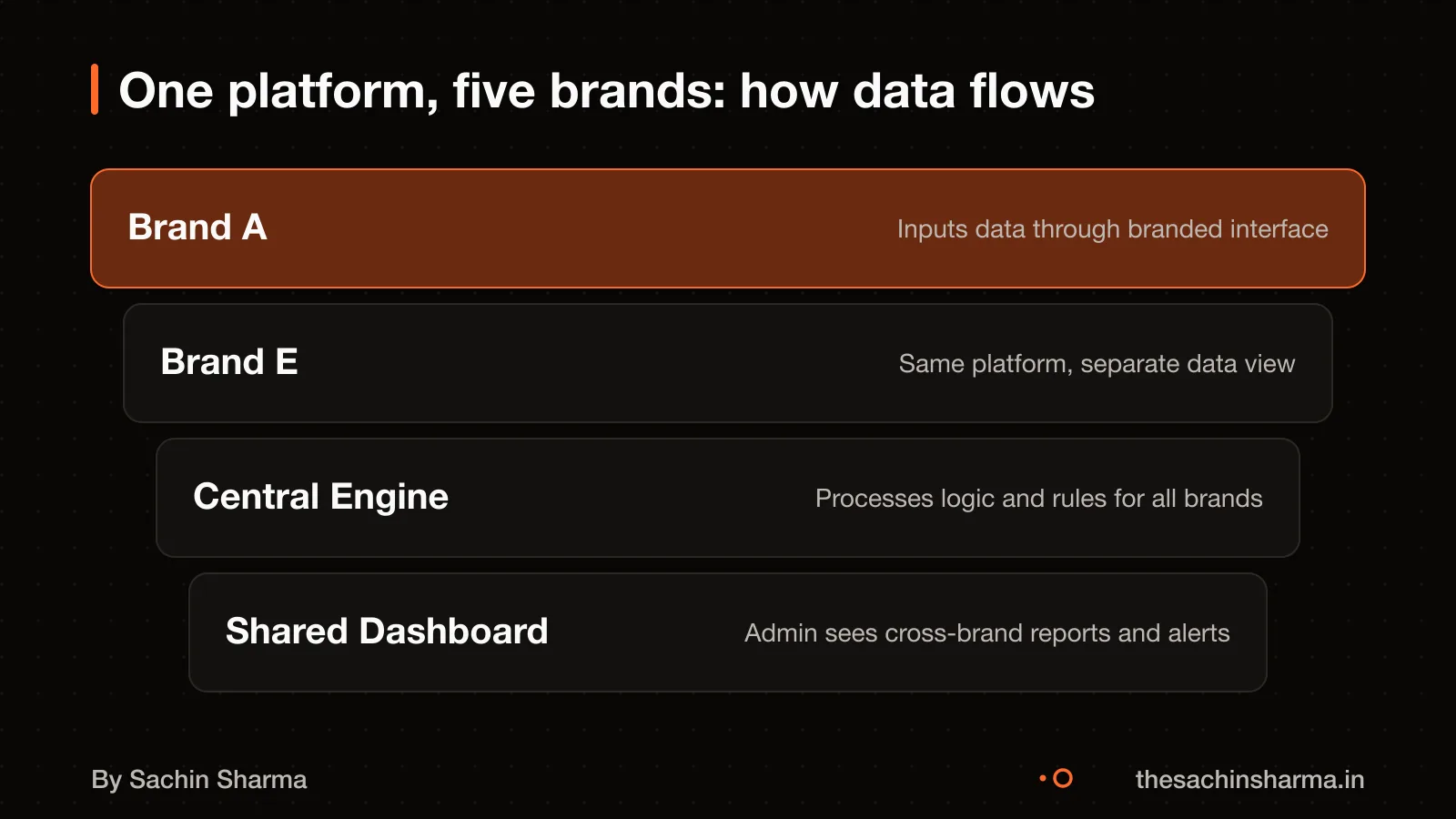
With a single platform, all brands share the same core software but stay isolated in their data. You get unified reporting and lower maintenance without mixing records. This design cuts cost and lets you act on data across the group.
Compare build or buy options for your app to see which approach fits your team and budget.
How much it costs to build a multi-tenant platform
A lean MVP for a multi-tenant platform starts at $40,000, while an enterprise-grade build can cost $400,000 or more. This range covers core features, basic tenant isolation, and early validation for a small group of users. Production-ready scale, which supports 100+ paying customer accounts reliably, adds $60,000 to $200,000 more. The final cost rises with more custom workflows, advanced security, real-time reporting, or integration with legacy systems. A single platform for all brands cuts long-term overhead, but only if you plan for scale from the start.
See how app costs are broken down in another project
Want a number for your platform idea? Send one line on WhatsApp. I reply with what drives the cost and what to cut.
Message me on WhatsAppHow long it takes to build and roll out
A lean MVP takes 8 to 12 weeks to build. This is for a core version with user login, basic data entry and reporting, built for one brand first. For example, a single dealership tracking leads and deliveries. A production-ready SaaS takes 12 to 20 weeks. This includes multi-tenancy, role-based access, audit logs and integrations like SMS or email. It is ready for all brands to use with their own data. An enterprise rollout takes 20 to 32 weeks. It adds custom workflows, compliance checks, training and phased launches across outlets. Delays happen if teams wait for perfect data or skip pilot testing. The timeline depends on how fast decisions are made, not just coding speed.
How one brand's data stays private from another's
Logical data isolation means each brand’s data is kept separate within the same shared system, so one brand cannot access another’s records. The software enforces this by tagging all data with a brand ID and checking it on every request.
A separate database for each brand offers the highest level of isolation. This is better when brands have strict compliance needs or when trust between them is low. It adds cost and complexity but reduces risk of cross-brand leaks.
Vendors should show you architecture diagrams that prove isolation. Look for network segmentation, encryption at rest and in transit, and access controls that check tenant identity. These are signs the system is built to protect data.
In a client project, every API call includes the brand context, and the backend validates it before returning any data. This ensures staff from one outlet see only their brand’s information.
Learn what an API is and why it matters for integration if you're unsure how systems talk to each other.
Have a vendor proposal? Send it to me and I will mark what is missing on data separation.
Message me on WhatsAppDid it actually reduce lead time? The real result
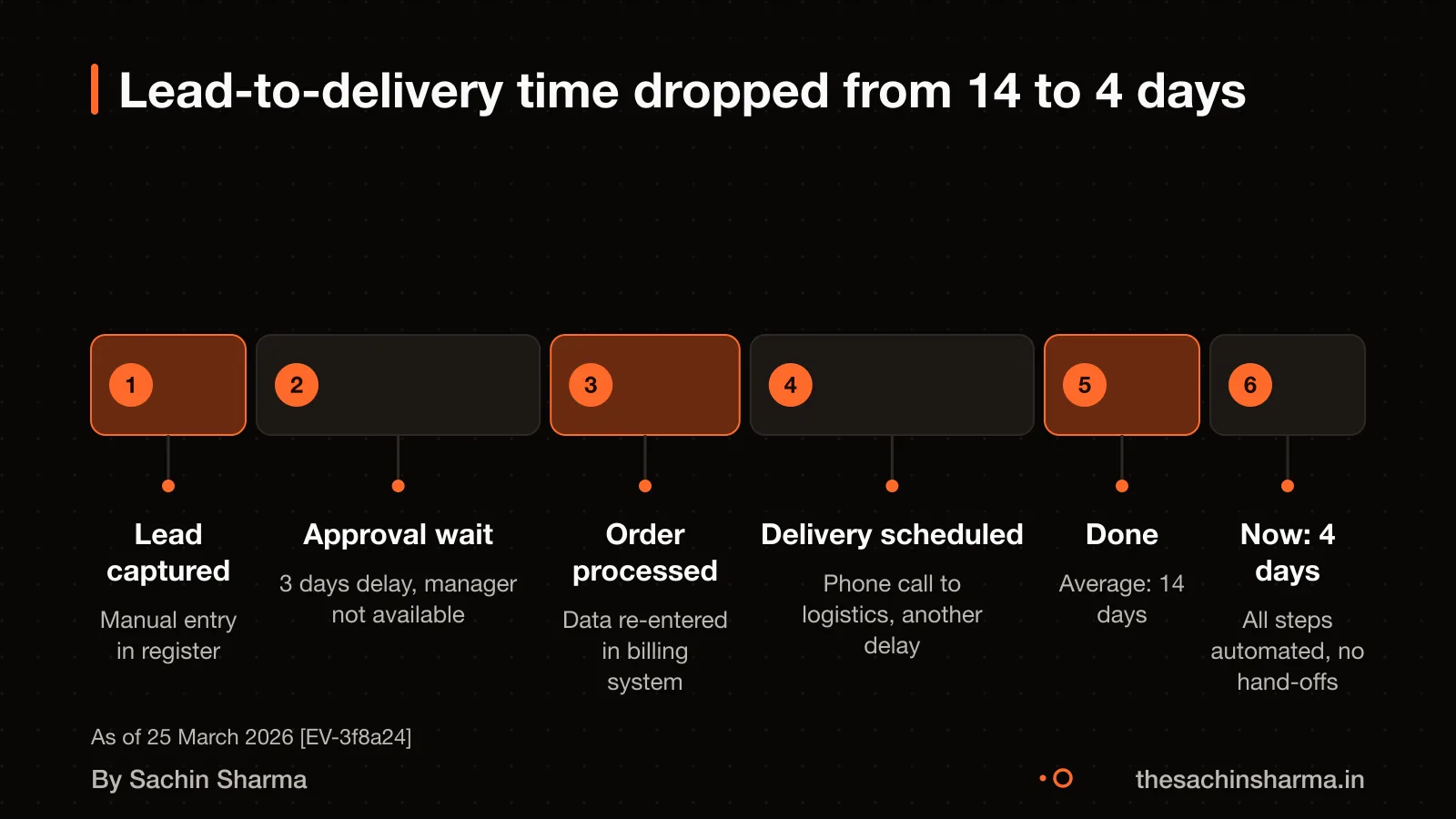
Yes, lead-to-delivery time fell from 2 weeks to 4 days. This improvement came from the software cutting manual handoffs, not from the code alone. The business had to align its habits to the new system. For example, managers stopped waiting for weekly meetings to approve orders and started acting on real-time alerts. The platform made faster decisions possible, but only when people changed how they worked. The client reported this result internally; I have not verified it with third-party data.
What could go wrong: common risks
Assuming all brands will use the platform the same way leads to poor adoption. Each brand may have unique workflows or customer expectations, so a one-size-fits-all interface can slow down staff. For example, a premium brand might need detailed service logs, while a budget brand focuses on fast turnarounds.
Designing the system before aligning brand managers causes rework. When teams are not consulted early, the software may not match how sales or service actually happens. Changes late in development cost time and weaken trust. Involving at least one lead from each brand during design reduces this risk.
Rolling out to all brands at once overwhelms staff and support. A staggered plan, starting with the most willing brand, allows time to fix bugs and train teams. Sudden launches lead to errors and frustration, especially if internet access or device readiness is not checked first.
Resource conflicts arise when brands compete for the same developers or budget. Without clear priority rules, some brands feel neglected. A shared roadmap with fixed quarterly updates helps avoid disputes over feature requests.
How we rolled it out: step by step
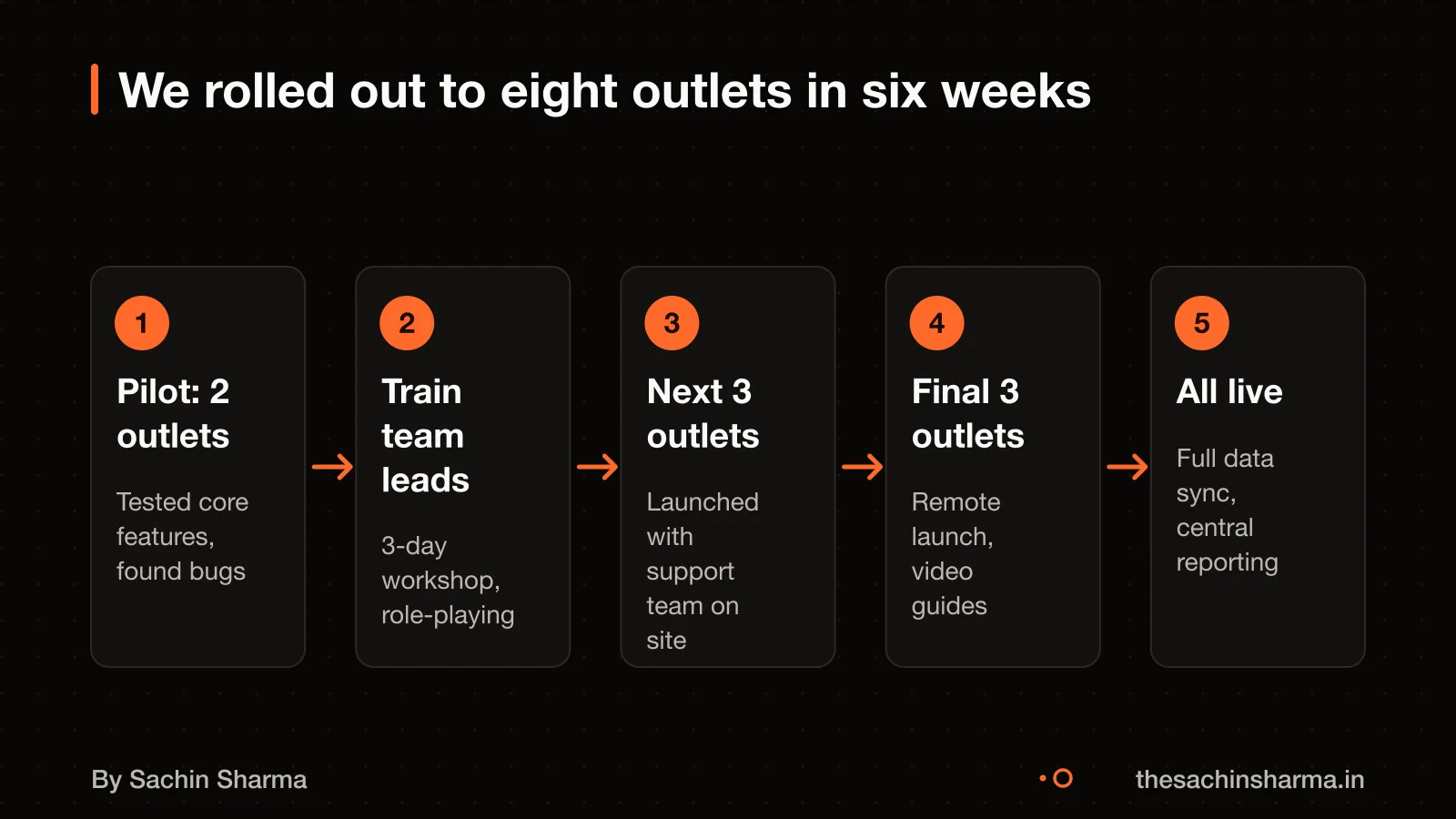
We did not launch all outlets at once. The rollout was phased to reduce risk and allow learning. Each brand went live one after another, starting with the smallest outlet to test the system under real conditions. This step-by-step approach let us fix issues early before they spread.
Staff training was handled during the changeover week for each outlet. Teams received hands-on sessions using their own data and common tasks. We paired each staff member with a buddy from another brand who had already gone live. Training focused on daily workflows, not software features.
Change management made up 60 to 70 percent of the total effort. It included weekly check-ins with brand managers, clear communication of wins, and quick resolution of concerns. Staff were involved in testing early, which built trust. Resistance dropped when they saw fewer errors and faster order tracking.
A post-launch plan ran for four weeks after each go-live. It covered monitoring, support, feedback collection, and small updates. Issues were logged and fixed in order of impact. This phase ensured stability before moving to the next brand.
When this advice is wrong for your business
- This advice is wrong if you run just one outlet. A unified platform needs scale to justify its cost and complexity. For a single location, a simple off-the-shelf tool may be faster and cheaper.
- It is also wrong if your brands serve very different customers or hold opposing values. For example, a luxury brand and a budget brand under one group may clash in tone, service speed or pricing, causing internal confusion.
- Do not centralise when brands compete for the same resources. If each brand fights for budget, staff time or feature updates, the platform can become a source of conflict instead of efficiency.
- Lastly, avoid this path if your team lacks the bandwidth to manage change across brands. Rollout needs strong internal coordination, and without it, adoption will fail.
What to do next if you're considering this
Next, talk to a developer who has built multi-tenant systems before. Ask them to explain how they will keep each brand’s data separate and secure. Check if their proposal includes a pilot phase for one brand or outlet, so you can test the software before going group-wide. Review what happens if the project runs late or over budget. You should also confirm who owns the code and data once it is built. For help scoping your own project, start by listing the key tasks each brand does daily, then map which ones the platform must support.
Related reading: Talk to a developer about your platform idea.
Next step: message me on WhatsApp with what you want to build. No forms, no sales team.
Message me on WhatsAppThe story, chapter by chapter
For A family-run conglomerate in Chhattisgarh (name not published). ₹150 Cr+ reported annual revenue across the group. Figures are as reported by the client and have not been audited.
- brands
- 5on one platform
- outlets
- 8connected in real time
- lead to delivery
- 4 daysdown from 2 weeks to 4 days
The ask
Run the whole group on one system
Five brands. Eight outlets. One platform.
Automobile, retail and real estate behave nothing alike, yet one family owned all five brands. The job was one platform that could serve all of them without forcing them into one shape.
The decision
Multi-tenant from the first day
One codebase to run, five businesses kept apart.
Multi-tenant means one system serving many separate businesses, each seeing only its own data. That was the right shape here: the group gets one thing to run and improve, while every brand keeps its own customers, stock and numbers apart.
What changed
Lead to delivery in four days
Two weeks became four days.
The measure the owners cared about was the time from an enquiry to a delivery. It fell from two weeks to four days, because the work stopped waiting on someone to pass it along.
Why real time
Eight outlets, one picture
Stop asking for reports. Look at the thing.
With outlets updating a shared system as things happen, the head office stops asking for reports and starts looking at the thing itself.
Three things to take away
- Pick the shape (multi-tenant, single-tenant) before the features. It is the hardest decision to change later.
- Choose one measure the owners already care about, and design toward it.
- A platform for a group is an operations project first and a software project second.
Questions people ask
01What is the simplest correct setup for a multi-tenant platform?
The simplest correct setup uses one software instance and shared infrastructure for all tenants. This setup supports scalability and logical isolation.
02What are the common failure modes in such projects?
Common failure modes include brand identity conflicts, competition for shared resources, and poor data quality. Brands may clash over messaging or audience, while shared teams and budgets create bottlenecks. Poor data quality can cost companies an average of $12.9 million annually.
03How do you test for data leaks between tenants?
Test for data leaks by running tenant-aware access checks that verify one tenant cannot read another’s data. Also validate logical separation during configuration.
04Can the platform handle poor internet at some outlets?
Yes, if the platform is designed with automated tenant provisioning. This supports offline operation and re-sync when back online.
05What legal rules apply to storing business data in India?
Cloud SaaS may not meet data residency requirements for regulated industries in India. In such cases, on-premise hosting or a private virtual private cloud (VPC) may be needed. Check this for your case with a chartered accountant or lawyer.
06Who maintains the platform after launch?
Maintenance includes actions to keep the platform healthy. Ongoing support can be arranged, but the exact terms depend on the agreement.
07What happens if the developer stops supporting it?
If support ends, clear code ownership and full documentation are essential so another team can take over. Since I work without agency layers (F-10), you get direct access to the codebase. But ensure licensing and handover terms are agreed upfront.