What a web developer does for your business
A web developer builds a working website that runs on phones and computers, handles customer actions, and supports your business goals. This includes making it load fast, work offline if needed, and connect to tools like payment or booking systems. A developer is different from a designer, who focuses on visuals, and a marketer, who drives traffic. You need a developer to make your site functional, not just good-looking. They should ask about your business goals because a site must help you earn or serve better. For example, if you run a repair service, the developer should suggest a one-click booking button and a live status tracker. A developer who skips this step may deliver a site that looks good but does not bring customers.
Custom website or template: which fits your needs?
A template is enough if you need a simple online presence with basic pages like home, about, and contact. This fits local electricians, salons or small shops that do not sell online. Templates are quick to set up and cost less. As an estimate, a basic template site can start from ₹15,000 to ₹40,000, but exact prices in Chhattisgarh are not published [unknown].
You need custom code when your business has unique needs. For example, a multi-outlet two-wheeler dealership like Ralas AutoCorp in Raipur needs custom features for inventory, bookings and brand separation. Custom websites let you add tools like payment gateways, user logins or regional language support. They take more time and cost more, but grow with your business.
The trade-off is cost versus control. Templates save money and time, but limit what you can change later. Custom sites cost more upfront and take longer, but you own the design and can update any part. If you plan to scale or add features like online booking or Hindi content, custom is better. For a static site with little change, a template works.
When deciding, ask if your site must do something no standard template offers. If yes, choose custom. If not, a template may be enough.
How long it takes to build a website
A simple business website takes 7 to 10 days to build. This timeline applies to simple sites with a few pages, such as a home page, about page, contact form and gallery. The developer can move faster if you provide content like text, images and logos early.
You can speed up the process by finalising your brand details before work starts. Choose your business name, tagline, colours and contact details ahead of time. Share examples of websites you like so the developer understands your style. Respond to review requests within 24 hours.
If your site needs extra features like online payments, bookings or a blog, it may take longer. Those are not counted in the 7 to 10 day range. Always ask for a timeline in writing before work starts.
Red flags when hiring a web developer
Watch for these warning signs when hiring a web developer. An unclear project scope is a red flag. It can lead to unstable requirements and surprise costs. A professional developer should explain what is included before work starts. If they avoid this, the project may go off track.
Poor communication is another red flag. It can cause missed timelines and low-quality delivery. If the developer does not discuss a timeline or milestones, that is a risk. Rushing the hiring process also increases the chance of a bad fit. Take time to confirm their approach.
A missing live portfolio is a serious concern. A credible developer should show real, working websites. If they cannot, you have no proof of skill. Vague scope, weak communication, and no live portfolio may lead to harder project management later. Also, if ownership of the site and assets is not clear, you could lose control later. These are signs to walk away.
How to verify a developer's past work
Real work means live websites you can visit and test yourself. A live site proves the developer built something that works for real users, not just pictures made to impress. Avoid developers who only show screenshots or mockups, as these can be fake or copied from others.
You should be able to type the website address into your browser and use the site on your phone or computer. Once on the site, open the browser’s developer tools to see the code, clean, well-organised code is a sign of professional work. You can also check for performance, mobile fit, and loading speed yourself.
Talking to past clients is the best way to know if the developer delivered on time, listened to feedback, and fixed issues. If a developer refuses to share a client’s contact, treat that as a red flag. You have the right to ask for one reference from a project like yours.
For more tips, see How to verify proof of work.
Website ownership and code rights
Who will control the final website and related assets should be confirmed. This protects you if you later change developers or update the site.
The code behind the website can be reused by others for their own site. However, your content, brand and layout are unique to your business. If the developer’s design is used with few changes, they may ask for credit as the designer. This does not affect your ownership of the final site.
To get full ownership, your contract should include a clause that assigns all rights to you. It must cover source code, admin access, domain, hosting and design files. Without this, you risk losing control even after paying. Use a written contract, not verbal promises.
For example, if a developer builds your site using open-source tools, they can share the code with others. But your business name, photos and contact details stay yours. The contract locks this in.
How the common arrangements work out
Want a number for your idea? Send one line on WhatsApp. I reply with what drives the cost and what to cut.
Message me on WhatsAppChhattisgarh's tech infrastructure for web projects
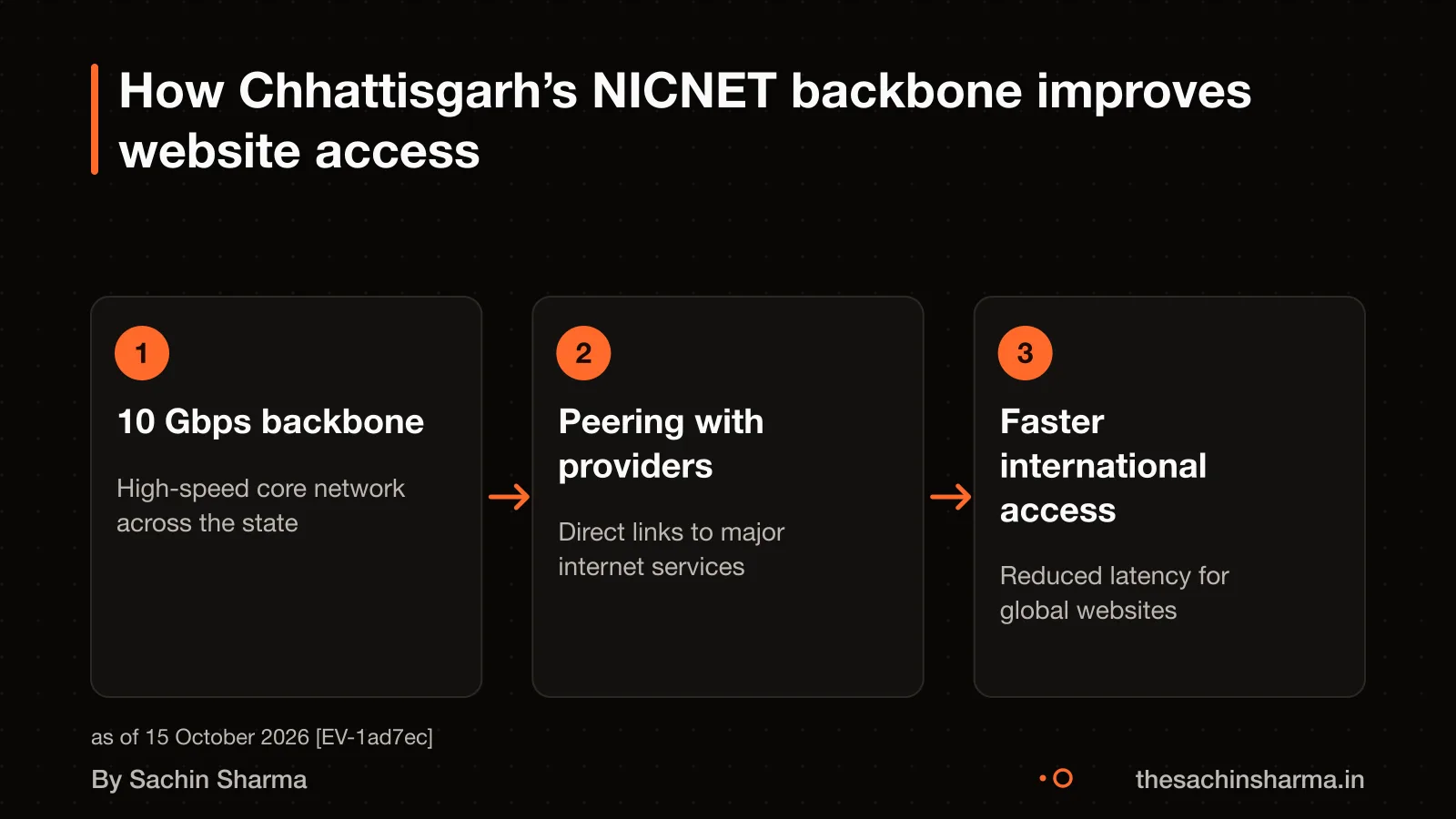
Internet connectivity in Chhattisgarh is reliable for web projects. The state's NICNET backbone runs on multiple 10 Gbps links. State-level connections use 1/10 Gbps links, while districts are connected through 34/100 Mbps links, with backup routes built in. Last-mile redundancy is in place for more districts, using BSNL as the primary link and Railtel or PGCIL as secondary providers.
Peering agreements with Google, Microsoft, and Akamai improve access speed to Google services and other important international websites. This means websites hosted on global platforms load faster for local users. High-speed internet is also provided to national data centres, reducing latency for applications accessed worldwide.
This infrastructure supports good website performance. Local users experience fast loading times, especially when sites use global content delivery networks. Even in areas with lower last-mile speeds, the layered redundancy helps maintain stable connections. As a result, businesses in Chhattisgarh can run online services smoothly without major technical hurdles.
Hindi and regional language support
Yes, websites in Chhattisgarh can support Hindi. The CTSP website offers a language switch to Hindi.
Hindi support is implemented using language toggle buttons that reload the page in the selected language. Each page must have its content ready in both languages. This means you must provide translated text for every section. The developer codes the switch and loads the right version, but does not translate for you.
Adding Hindi support does increase cost. It roughly doubles the content work, since every page exists in two versions. Testing should include checking labels, forms and instructions in the target language.
Do not skip this step, even if the English version looks fine.
Next step: message me on WhatsApp with what you want to build. No forms, no sales team.
Message me on WhatsApp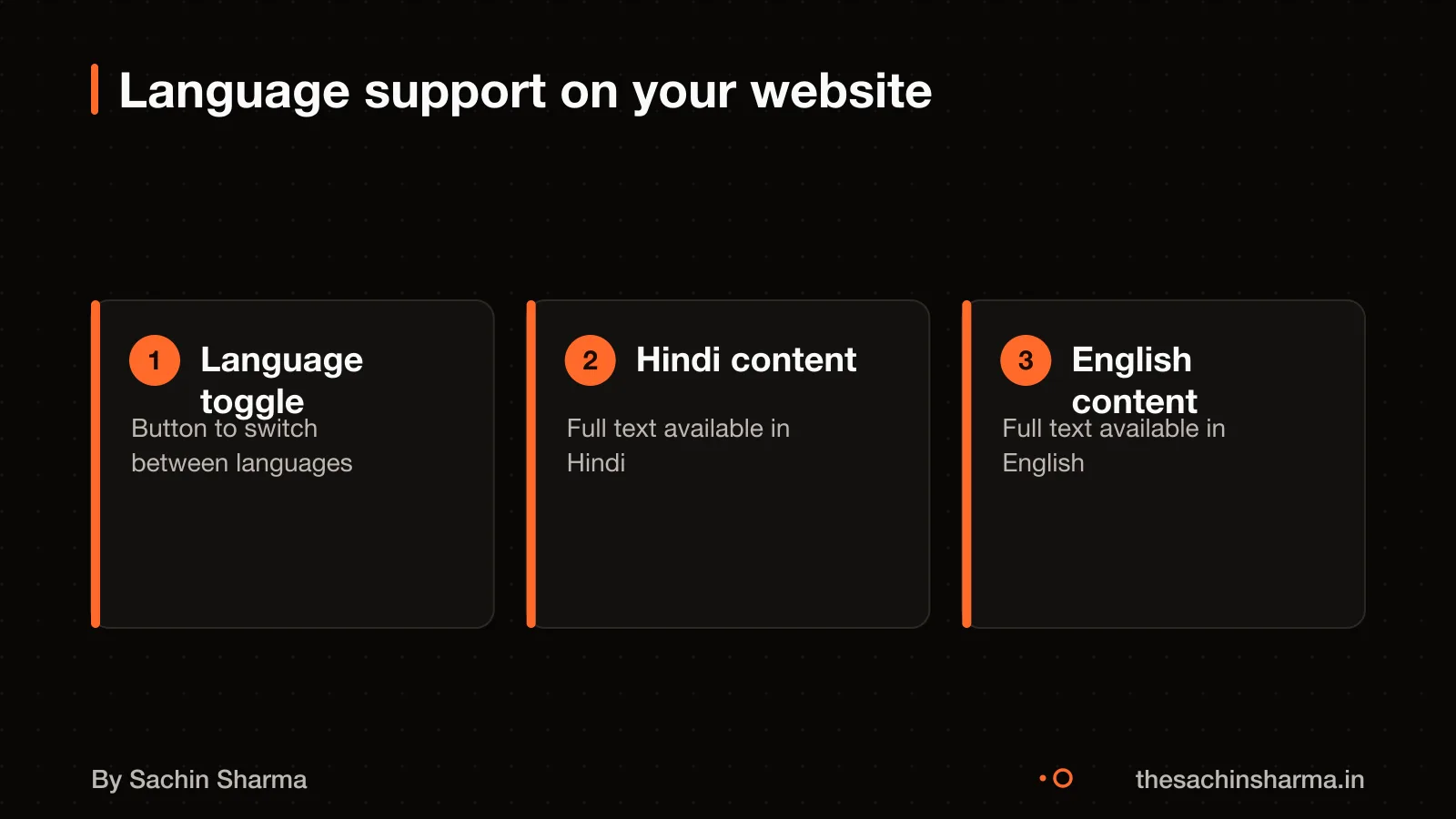
Ongoing support after launch
You should expect the developer to fix bugs and keep the site working after launch. How long this lasts and what it covers must be agreed in writing. The contact form requires AWS SES setup.
If they used third-party tools like an API, they may be best placed to maintain it. Always confirm who will handle future changes before launch.
There may be a maintenance cost after the first month. Routine updates, security patches, and new features may cost extra, but specific costs are not published.
For clarity, ask the developer: - What support is included and for how long? - Who owns the code and can another developer take over? - Are there monthly or yearly costs for hosting, email, or updates?
Since broader support terms are not published, get all promises in writing. If they do not offer a support plan, you may need to hire help later for updates or downtime.
When not to hire a web developer in Chhattisgarh
- You do not need a website if your business runs on word-of-mouth or local foot traffic alone. A Facebook page or WhatsApp number may be enough. For example, a roadside tea stall or a home-based tailor may not need a full site.
- A template-based site is enough if you only need to share static information like your address, hours, or menu. This fits small shops, clinics, or service providers who do not take bookings or payments online. Use platforms like Wix or WordPress with local hosting.
- Delay hiring a developer if you are unsure about your business goals or brand name. Rushing into a website with the wrong name or message wastes money and confuses customers. First, clarify your offering and get feedback from real customers.
Related reading: What an API is and how it affects support.
Questions people ask
01How do they differ under load?
Performance under traffic can depend on hosting, code, and caching. Testing live sites with performance tools is recommended.
02What does migration cost later?
Migration cost may depend on code documentation and asset access. Clean code may reduce future costs. To help avoid high fees, consider ensuring contract terms include ownership and source code access.
03What fails first?
The contact form can be made to work by setting up AWS SES. Testing the contact form early is advisable.
04Can I move my website to another developer later?
Yes, you can move your website if you have full access to the source code and domain. Without written transfer rights, you may be locked in. Always confirm ownership and get the code repository handed over at the end of the project.
05Are there state-level incentives for digital projects in Chhattisgarh?
Chhattisgarh offers a Fixed Capital Investment Subsidy and interest support for IT projects over ₹50 crore. These incentives aim to attract large-scale digital infrastructure. Check this for your case with a chartered accountant or lawyer.
06What technical skills should a web developer in Chhattisgarh have?
07How do I check if code is clean and maintainable?
Test the site in modern browsers on desktop and mobile to check general function. Use the W3C validator to check if HTML tags are properly closed and nested.. Use linters to flag warnings about bad practices in CSS. Avoid prefixed CSS features that cause cross-browser issues. Valid CSS and clean markup mean easier updates later.