What a developer actually does on a D2C app
A developer builds the parts of your app that no-code tools cannot handle, like secure checkout and customer data systems. These are custom to your brand and must work reliably from day one. No-code platforms often limit how you collect, store or use customer data, so a developer ensures you own this layer.
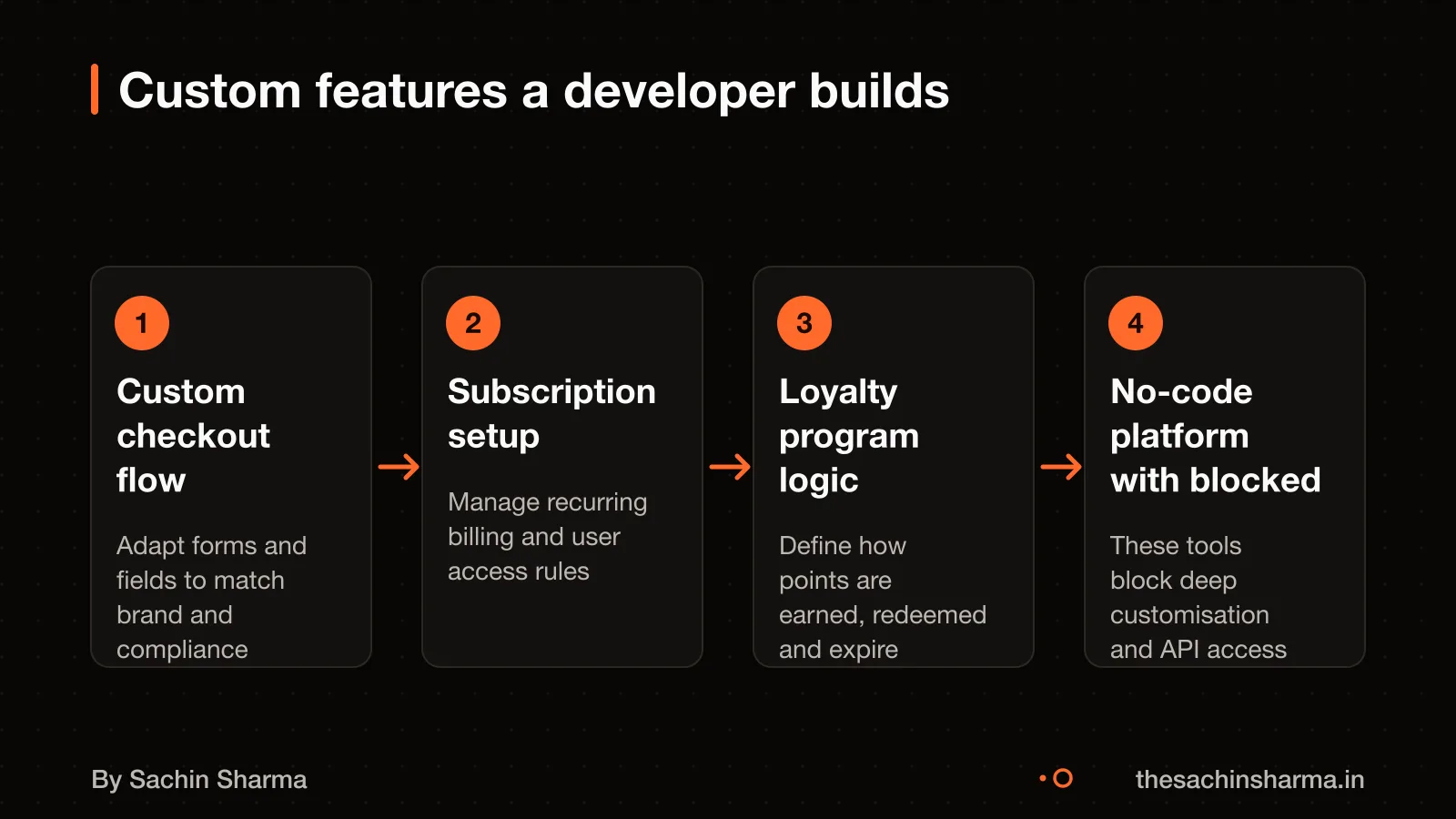
They create custom features such as brand-specific loyalty programs, subscription flows, or personalisation engines that fit your audience.
Developers use APIs to connect your app to tools like Shopify, payment gateways, or analytics services. With Shopify’s Storefront API, they can pull product data, update inventory, and process orders directly from your store. This keeps your app in sync without manual updates.
On the frontend, they build what your customers see and interact with: product displays, navigation, and checkout pages. This includes making sure buttons work, text loads fast, and the design looks right on all phones. A clean frontend keeps users engaged and reduces drop-offs.
when a developer beats an AI app builder
When you don't need a developer
You can use Shopify or WooCommerce without a developer for basic store setup and sales. These platforms let you launch a store using templates and built-in tools. A developer becomes necessary only when you want custom features, native mobile apps or deep automation. If your app is not updated, it becomes unsupported when the platform changes its APIs. Shopify releases new API versions every 3 months. Each version works for 1 year before it stops. After that, your app needs updates to keep running. Without updates, your app becomes unsupported. Many store owners start without a developer and hire one later when growth demands custom work. You can use a pre-built theme and add-ons at first. This saves cost and time. Later, a developer can extend it. For example, adding a loyalty program that syncs across web and app needs custom code. If you plan to stay small and use only standard tools, a developer may not be needed. But if you expect to grow, plan for one early.
You may also need a developer to fix issues when Shopify updates its system. Even if you start without one, future changes may force you to hire. Know this risk before going live. For more on how developers handle platform-specific updates, see how developers handle platform-specific updates.
How a D2C app gets built
A D2C app is built in modules, not just features, so each part works as a system with its own data and links. The core modules are catalog and inventory, brand-owned checkout, payments, subscriptions, customer accounts and CRM, and personalisation. These modules are developed after market research, wireframing and UI/UX design, in a process that includes frontend and backend work, testing, and launch.
The catalog and inventory module holds product data, variants, pricing rules, and real-time stock levels that stay in sync across all sales channels. This means if you sell on your app, website and marketplaces, stock updates at the same moment everywhere. A well-built module avoids overselling and keeps pricing consistent.
The brand-owned checkout is the most important part of the app for conversion. It includes guest checkout, saved payment methods, address validation, and clear shipping costs shown early in the flow. It should take as few steps as the payment provider allows. A smooth checkout builds trust and reduces drop-offs.
The payments module supports multiple gateways and local Indian methods like UPI and net banking. If you sell across borders, it can handle multi-currency. It must also support tokenisation and meet PCI-DSS compliance for secure transactions. This ensures you can accept payments safely and widely. For more on how APIs connect these systems, see what to ask your developer about APIs [/glossary/what-is-api/].
Key technical skills for a D2C app developer
A D2C app developer should know Flutter or React Native based on your app’s needs and team skills. Flutter compiles to fast machine code for both Android and iOS devices.
For testing, developers use tools like Android Studio with its built-in emulator to run the app on different device types and sizes. This helps catch bugs before launch. Debugging is done using logs, breakpoints, and performance tools in the IDE.
Good technical documentation includes architecture diagrams, database schemas, API specs, and security details. This helps you or another developer understand the app later. It also makes future updates safer and faster.
A developer must explain why they made technical choices. If they cannot explain why a feature was built a certain way or how a problem was solved, that is concerning. Clear reasoning builds trust and shows ownership.
Architecture decisions that shape your app
A good developer chooses an app structure that keeps costs low and lets your brand scale. The wrong choice locks you into high fees or slow updates later. Monolithic apps bundle everything together and launch fast, but are hard to change. Headless or composable setups cost more at first, but let you swap parts easily as your business grows. This trade-off shapes how much you pay over time.
A developer builds them to work together without slowing each other down.
Poor architecture creates long-term technical debt, making updates slow and expensive. For example, if the catalog and inventory are not linked properly, stock levels go wrong and orders fail. Fixing this later takes more time than building it right the first time.
A developer plans these systems so changes later take hours, not weeks. They pick tools that match your growth speed and budget.
Still unsure between monolithic and headless? Tell me your budget and timeline and I will say which fits.
Message me on WhatsApp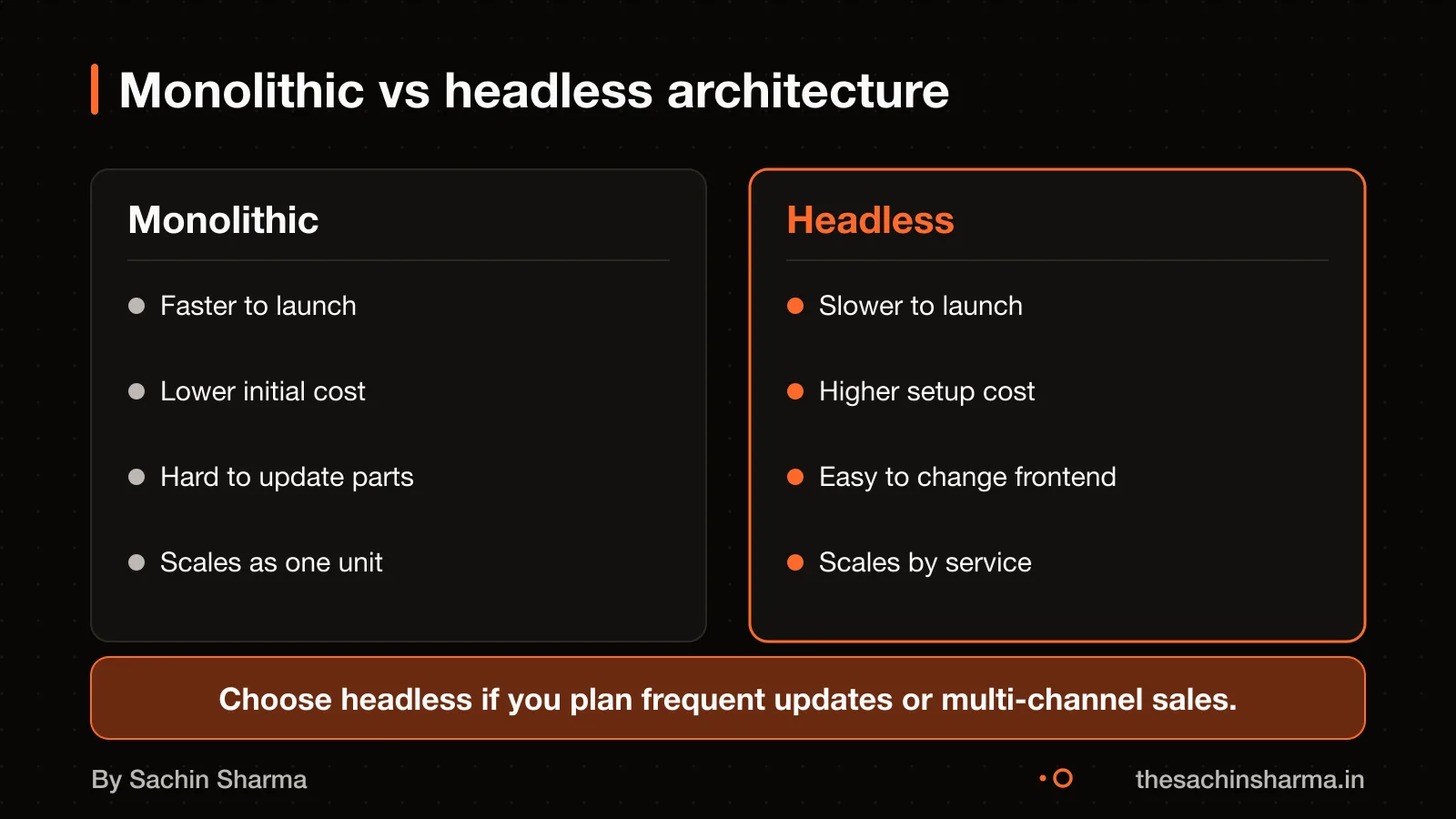
What can go wrong with poor technical choices
Poor technical choices can break your D2C app after launch. The wrong database or hosting setup can slow it down or cause crashes during sales spikes. For example, using a basic shared server when you need real-time inventory sync across cities will lead to order errors.
Security and compatibility issues arise when apps are not updated regularly. Outdated code can let hackers exploit known flaws, especially if you handle customer logins or payments. Apps that rely on third-party tools, like payment gateways or AI features, face more risks if those links are not checked often.
An app becomes vulnerable without updates because new phone OS versions may stop supporting old code. Without ongoing maintenance, even a well-built app can become slow, buggy, or stop working. For instance, Android updates sometimes drop support for older login methods, locking users out.
App complexity increases maintenance needs. Each added feature like user profiles, chat support, or AI recommendations multiplies the work to test and fix things. Poor initial architecture makes this worse, creating technical debt that raises costs over time. A simple change could take days instead of hours.
A poorly planned app affects field staff who rely on real-time data. If the app crashes during delivery updates or stock checks, your team loses trust in the tool. This harms customer service and slows growth.
Not sure if your project has this risk? Tell me the plan in two lines and I will say yes or no.
Message me on WhatsAppWhen this advice is wrong
When this advice is wrong
You do not need a developer if a no-code platform like Shopify or WooCommerce meets your needs. These tools work well when you only sell online with standard features and do not plan to add custom logic or deep integrations. For such cases, a developer adds cost with little gain.
An agency may be better if you need a full team for design, marketing and support, not just code. But agencies often charge more and move slower than a single skilled developer. Use one only if you want bundled services and have the budget.
An in-house team makes sense only when your app is central to your business and you expect constant changes. For most early D2C brands, this is too expensive. Hiring full-time developers in India costs ₹12 to 20 lakh a year per person, plus overheads.
If your app needs only basic features, like a product list, cart and payment, start with a no-code tool. You can hire a developer later to build a custom app once you know what your customers really want.
Your checklist
Before hiring, check these 12 points in the order they matter. Tick what you've verified; the page tells you where you stand.
Architecture
Skills
Proof
Cost
Walk away if
- Quotes a total without scope breakdown
- Won't say who writes the code
- Asks for full payment upfront
- Keeps store accounts or repo access
- Promises fixed date before seeing scope
Questions people ask
01What does the engineer actually decide on a D2C brand app?
The engineer decides on the app's architecture, core modules, and data flow between systems. Architecture choices like monolithic or headless affect long-term cost and flexibility. A D2C eCommerce platform is made up of core modules like catalog and inventory, brand-owned checkout, payments, subscriptions, customer accounts and CRM, and personalization.
02Which skills matter most for a D2C brand app developer?
Strong skills in Flutter or React Native, testing tools, and technical documentation quality are most important. Flutter compiles to native code and JavaScript for fast performance on any device. Good documentation includes architecture diagrams, database schemas, and API specs.
03How do I test if a developer knows what they're doing?
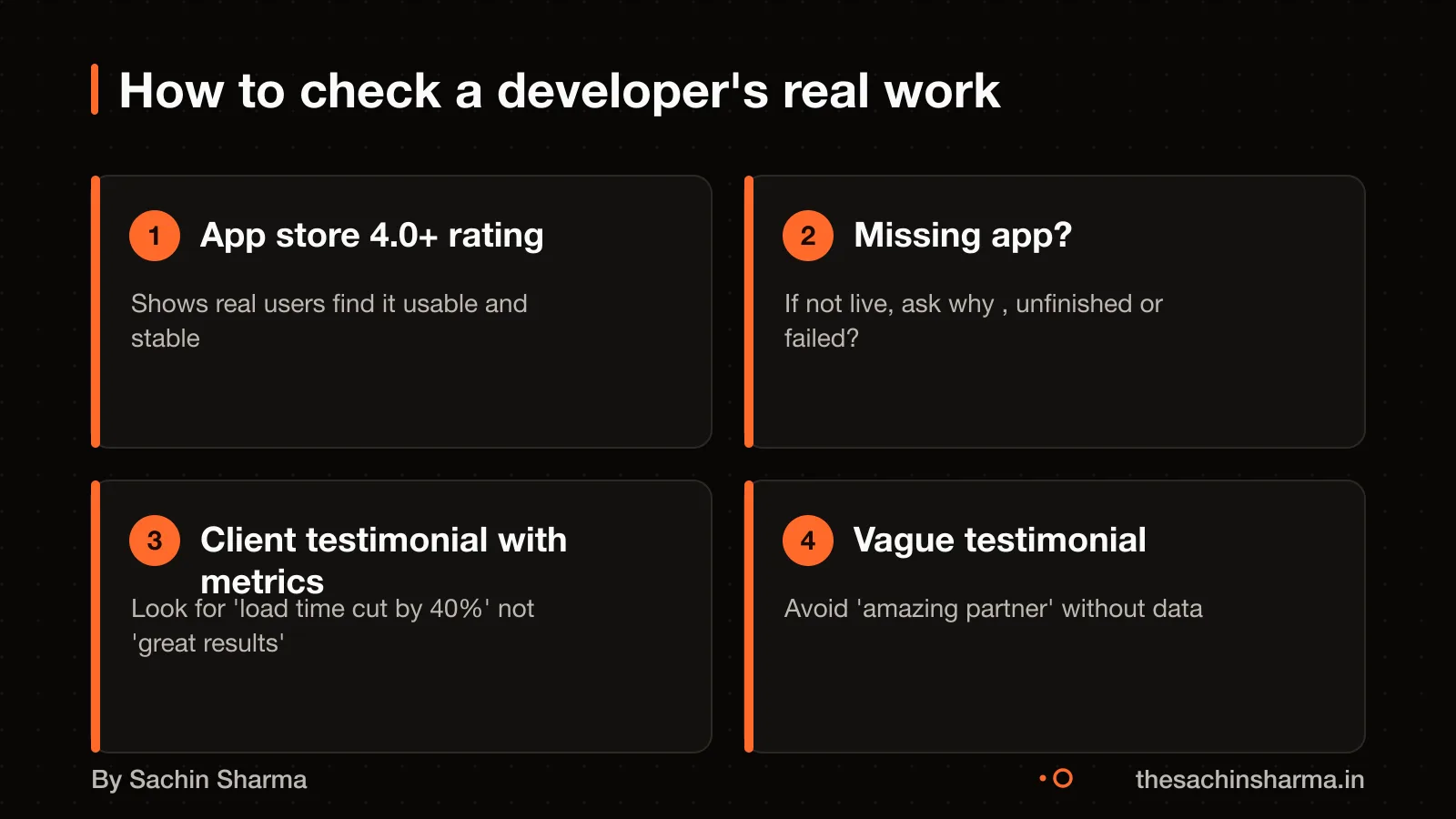
Ask them to explain their past technical decisions and show documentation. A developer who cannot explain why they made certain choices is concerning. Check if they respond to user reviews, which shows post-launch care. Review their app store presence and test apps if available.
04What legal rules apply to D2C apps in India?
Your app must get user consent before collecting usage data. If handling Custom Level 2 PII apps, your store must be on a Grow plan or higher. For EU customers, you must support order withdrawal from the My Account page. Check this for your case with a chartered accountant or lawyer.
05How are refunds and GST handled in a D2C app?
WooCommerce 11.1 allows refund previews using a new endpoint before applying them. For EU customers, order withdrawal is supported. GST compliance depends on your invoicing setup. Check this for your case with a chartered accountant.
06What ongoing costs should I expect after launch?
Annual maintenance costs 15% to 20% of the original development budget. This covers hosting, monitoring tools, support, and updates. Apps should be updated monthly or quarterly based on usage and complexity.
07What red flags should I watch for in a developer's portfolio?
Missing apps in app stores are a red flag, especially if multiple have disappeared due to policy violations or poor performance. Avoid portfolios with vague success stories that lack specific details. Always ask for explanations for missing apps or generic claims.