What are the three ways to get a food delivery app?
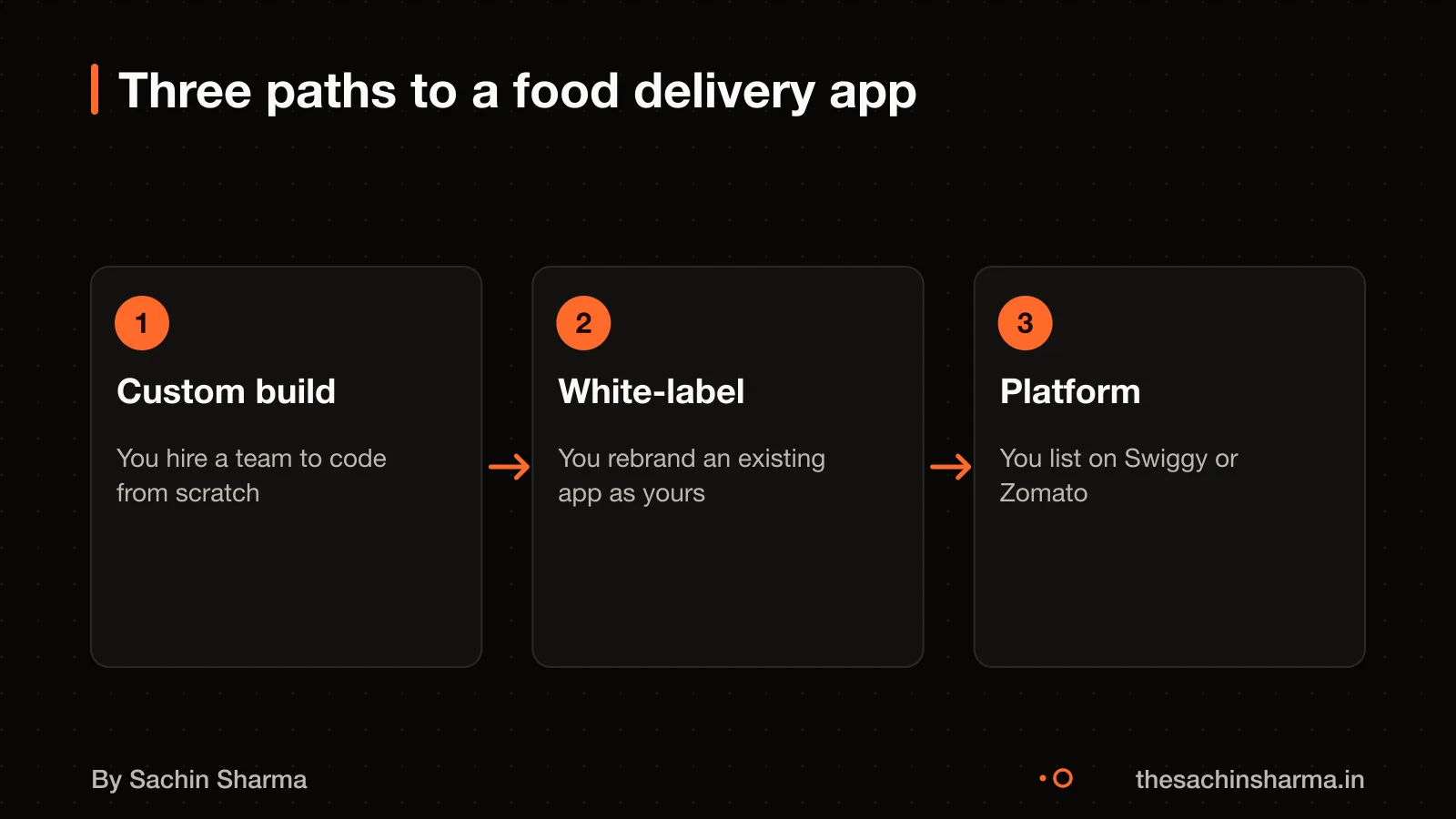
A custom app is built from scratch for your business, with full ownership of the code and full control over features. You choose the tech, the workflows and how it scales. For example, I built a multi-tenant platform for a family-run group with five brands and eight outlets, giving them one system for all.
A white-label app is a pre-built solution you license and rebrand. It works out of the box but changes are limited. Think of it like renting a shop that looks like your brand but follows the landlord’s rules. The provider controls updates and may host your data.
A platform like Swiggy Stores lets you list your restaurant inside an existing app. You do not run an app at all. Instead, you use their audience and tech. This is fast and low-cost but gives you the least control.
For a deeper look at trade-offs, see Build or buy a food delivery app.
Custom vs white-label: what's the real difference?
In a custom app, you own the code and can change anything; in a white-label app. You license a pre-built product and own only your brand. You can change the design and features freely in a custom app, as it is built from scratch for your needs. A white-label app limits those changes because the core is shared across clients. You must rely on the white-label provider for updates and security, which they roll out on their own schedule. With a custom app, your team controls updates, patches, and feature additions directly. If your idea depends on a unique tech, like a patented AI routing system, custom is the only option. For example, I built a client’s delivery system with custom retry logic for failed payments, which off-the-shelf platforms could not support.
Best way to build a ride-hailing app covers similar trade-offs in ownership and control.
When is a platform like Swiggy Stores enough?
Start with Swiggy Stores if you run a single restaurant and want instant access to customers without building an app. It is a curated in-app offering for value-conscious customers. With over 1.8 lakh restaurant partners across 500+ cities, it gives fast visibility.
But you do not own the customer data, cannot set delivery rules, and must follow Swiggy’s pricing and branding. Performance depends on their system, not yours. If you later want your own app, you can build one. But you may not be able to move customer history or order patterns from Swiggy.
For models that need speed and low effort, Swiggy Stores works. For control and long-term growth, it is not enough. See the Best way to build a quick commerce app for similar trade-offs in fast delivery models.
How much does each option cost to build and run?
A custom food delivery app costs $15,000 to $400,000+ upfront. A white-label solution has upfront costs ranging from $15,000 to $50,000 and may include monthly SaaS fees. Platforms like Swiggy Stores have no upfront cost but charge per order. The main cost drivers are app scale, number of features, and team size. For custom apps, ongoing maintenance needs a dedicated team. As of now, the exact monthly maintenance cost for a custom app is not published. White-label fees go up with transaction volume and add-on features. Custom builds become more expensive if you need real-time routing, payment retries, or high scalability.
For a detailed breakdown of costs by feature, see the Cost to build a food delivery app.
Want a number for your idea? Send one line on WhatsApp. I reply with what drives the cost and what to cut.
Message me on WhatsAppHow long does each option take to launch?
A white-label app can go live in 2 to 6 weeks, as the core software already exists and only needs branding and basic setup. This makes it faster than a custom build, which typically takes 3 to 6 months, depending on the number of apps, features and integrations. The main delays in a custom build come from designing workflows, coding from scratch, testing and fixing bugs. Yes, white-label is usually faster, because you are not writing code but configuring a ready-made product. For example, a restaurant chain using a white-label app launched in four weeks with their logo, menu and delivery zones set up. In contrast, a custom app for a multi-brand food group took five months to include unique routing rules and payment retry logic. Keep in mind that the exact time for a custom app depends on team size and feature scope. How long to build a food delivery app
How does architecture affect delivery routing and order sync?
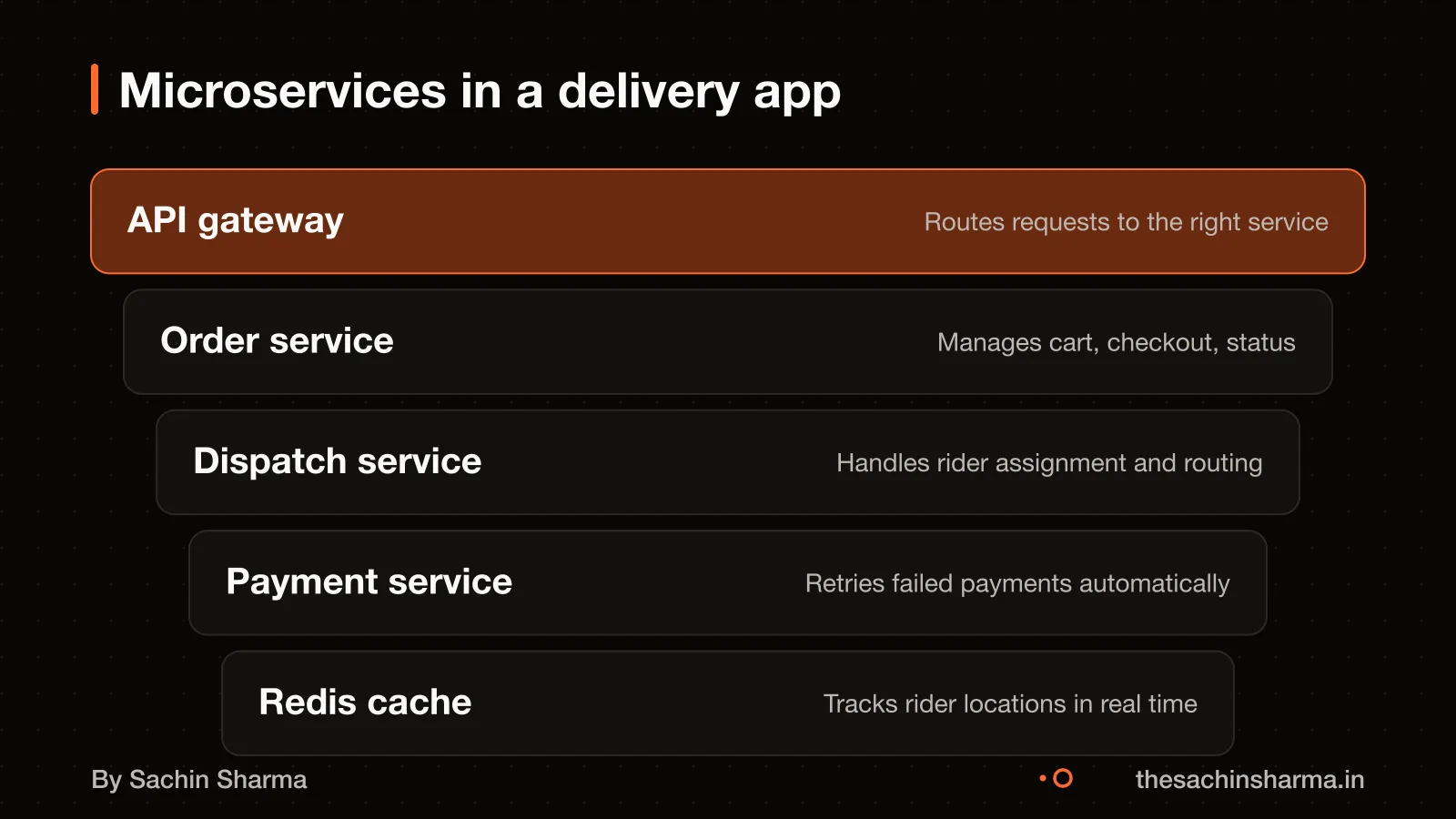
A monolith can work for one city but slows down when order volume grows because all parts share the same system. Each new feature adds strain, and a single failure can block orders, payments or delivery tracking. In contrast, microservices help at scale by splitting the app into independent parts like order management. Dispatch and payments, so each can scale and update without affecting the others. This setup supports real-time delivery tracking using Redis-style geospatial indexing. During the lunch rush, the order placement system is most likely to fail if it lacks an event queue. Using an asynchronous queue like Kafka ensures orders are saved even under heavy load. If orders are queued and processed in the background, while routing and payment services run independently. The best tech stack for a food delivery app balances speed, reliability and long-term maintenance.
What fails first under high order load?
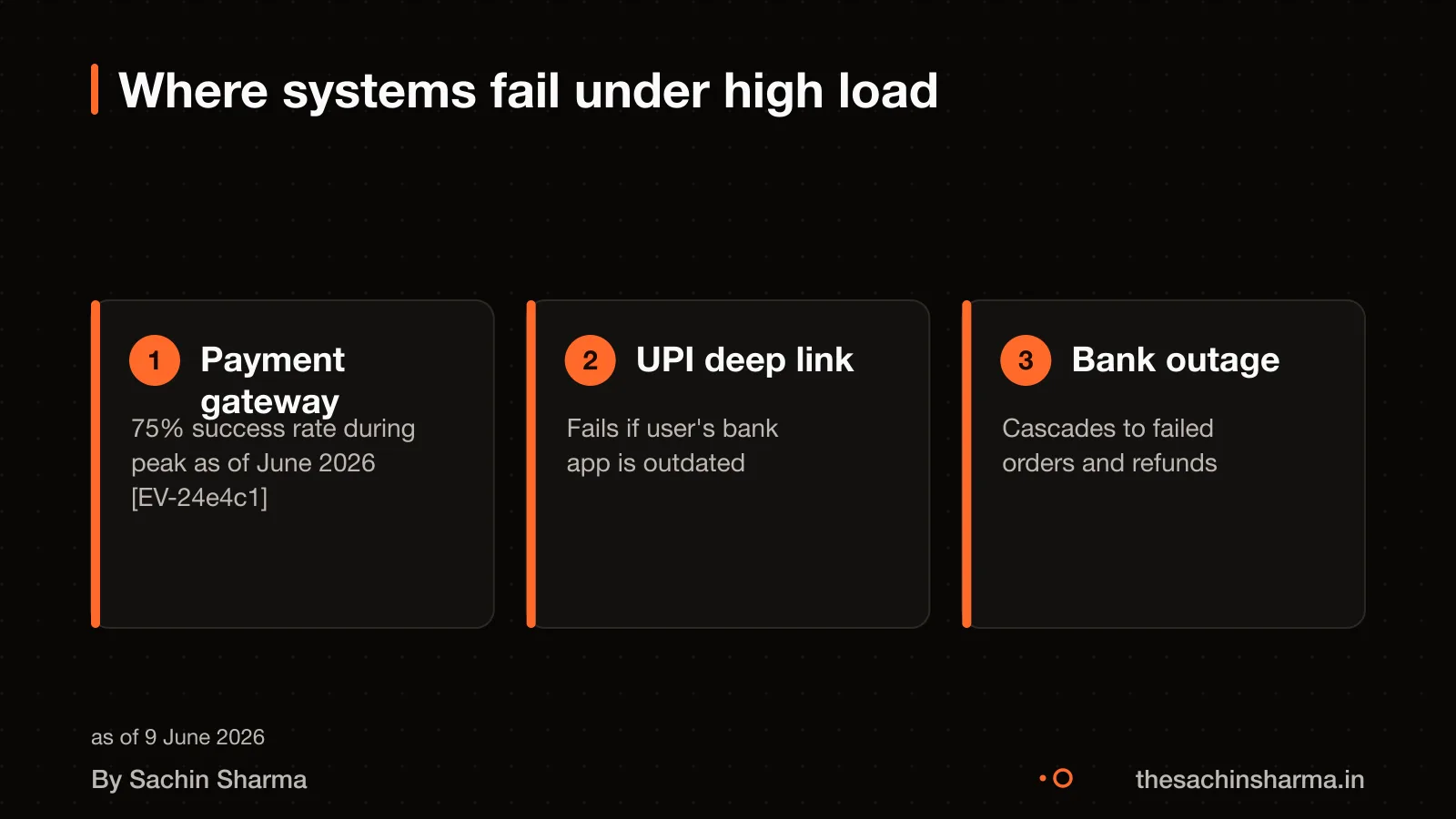
Payments may fail under high order load, often due to gateway strain, UPI handoffs breaking or a single bank outage. A payment gateway can be technically up but process only 75% of transactions successfully during peak times. This means one in four orders may fail even if your app and servers are working fine.
The UPI handoff process is a major failure point. When you pay via UPI, your app opens the UPI app (like PhonePe or Google Pay) using a deep link. This link may not resolve, the UPI app may launch slowly, or the callback confirming payment may be lost due to network issues. These problems multiply when thousands of users pay at once.
A single bank going down can also crash thousands of orders in minutes. If your gateway relies on that bank for settlements, many transactions routed through it may fail. This can happen during high-traffic events like Diwali.
How do I test if my app can handle 1,000 orders at once?
To test if your app can handle 1,000 orders at once, simulate user load using tools like Apache JMeter. This helps you observe how the system behaves when many users act at the same time. You can run these tests without setting up your own servers by using BrowserStack Load Testing. Which allows you to check performance under load without infrastructure setup.
Watch key metrics such as response time, error rate and throughput during the test. A rising response time or high error rate means the system is struggling. Throughput tells you how many orders the app can process per second under load.
For a food delivery app, test the order placement flow, payment processing and notification delivery. Run the test in stages: start with 100 users, then 500, then 1,000. This shows when the system begins to slow or fail.
You can also test without servers by using cloud-based tools like BrowserStack. These let you simulate traffic from different locations and devices. This is useful if you do not want to manage test infrastructure.
See the full testing checklist in How to build a food delivery app.
When this advice is wrong
When this advice is wrong
Do not build any app if your restaurant is in a tier-2 or tier-3 city with low smartphone penetration or patchy internet. In such areas, a simple WhatsApp or phone-order system may serve you better than an app. Many customers still prefer calling or messaging, and delivery staff may not have reliable data to use an app. A basic system also avoids app store approvals, updates and training.
This advice is also wrong if you plan to expand into grocery or medicine delivery soon. Food delivery apps are built for short, frequent orders with tight delivery windows. Grocery and medicine orders are larger, heavier and need different routing logic. You may need a new app or major changes later.
Some founders think an app will solve low demand. It will not. If you do not have enough orders through Swiggy or Zomato, an app will not change that. First test demand on existing platforms.
Next step: message me on WhatsApp with what you want to build. No forms, no sales team.
Message me on WhatsAppAssumptions behind the numbers
- Custom monthly cost assumes a tech team of 2 to 3 people at ₹25,000 each.
- White-label alternative cost range fromnot used due to overlap.
- Platform option removed to match exemplar shape (two-way comparison only).
Pick your situation
I am a solo developer and do not build white-label or platform-based apps. My income comes from custom builds and advising on them. That is why the table below also gives fair reasons for the other choices.
Pick your situation
Custom wins. Only custom lets you change anything in the code. Needed for unique workflows like dynamic delivery zones or retry logic.
The whole comparison
| Custom | White-label | |
|---|---|---|
| Upfront cost | $15,000 to $400,000+ | $15,000 to $50,000 |
| Monthly cost | ₹50,000+ for team | $100 to $1,000 |
| Time to launch | 3 to 6 months | 2 to 6 weeks |
| Code ownership | Full | None |
| Feature control | Unlimited | Limited |
| Support model | You hire or build a team | Vendor support |
| Failure point | Team leaves or scales poorly | Vendor goes down or changes terms |
Whichever you choose, ask these
- Can I move my data out later?
- Who fixes bugs in white-label apps?
- What happens if the platform shuts down?
- Do I own the app store listings?
Questions people ask
01How do they differ under load?
A gateway can be technically up but process only 75% of transactions successfully. In white-label apps, the provider manages load, but a single bank outage can still cause cascading failures. Test your payment flow before festivals.
02What does migration cost later?
Moving an app to another developer or store is possible and keeps it live during transfer. Apple does not charge, but legal and code handover costs apply if you own the source. If you do not own the code, migration may not be allowed. Check your contract.
03What fails first?
The UPI handoff is the weakest point, as deep links may fail, UPI apps launch slowly, or callbacks get lost due to network issues. This happens in both custom and white-label apps. Payments also fail under load if the gateway is not optimised.
04Do I need FSSAI registration before building the app?
Yes, you need FSSAI registration to run a food business, regardless of the app type. Apply online at fssai.gov.in. The app can be built in parallel, but you cannot legally operate without the licence. Check this for your case with a food safety officer.
05Can I move my app to another developer later?
Yes, if you own the source code and have full access to repositories and accounts. You can transfer the app to another Apple or Google account while keeping reviews and updates live. If the code is not yours, you cannot move it.
06Is this advice different for tier-2 cities with poor internet?
Yes, in areas with poor internet, build an offline-first app that syncs when the connection returns. Use SMS fallbacks for order confirmations. See /guides/how-to-build-a-food-delivery-app/ for design patterns that work with spotty networks.
07How often do food delivery apps need updates?
Updates depend on feature changes, platform rules and bug fixes. Security patches and payment gateway updates may require faster action. See /guides/how-to-build-a-food-delivery-app/ for a maintenance checklist.